Global Azure Veneto 2026: Databricks Enterprise Architecture: VNet Injection, SCC, and NCC

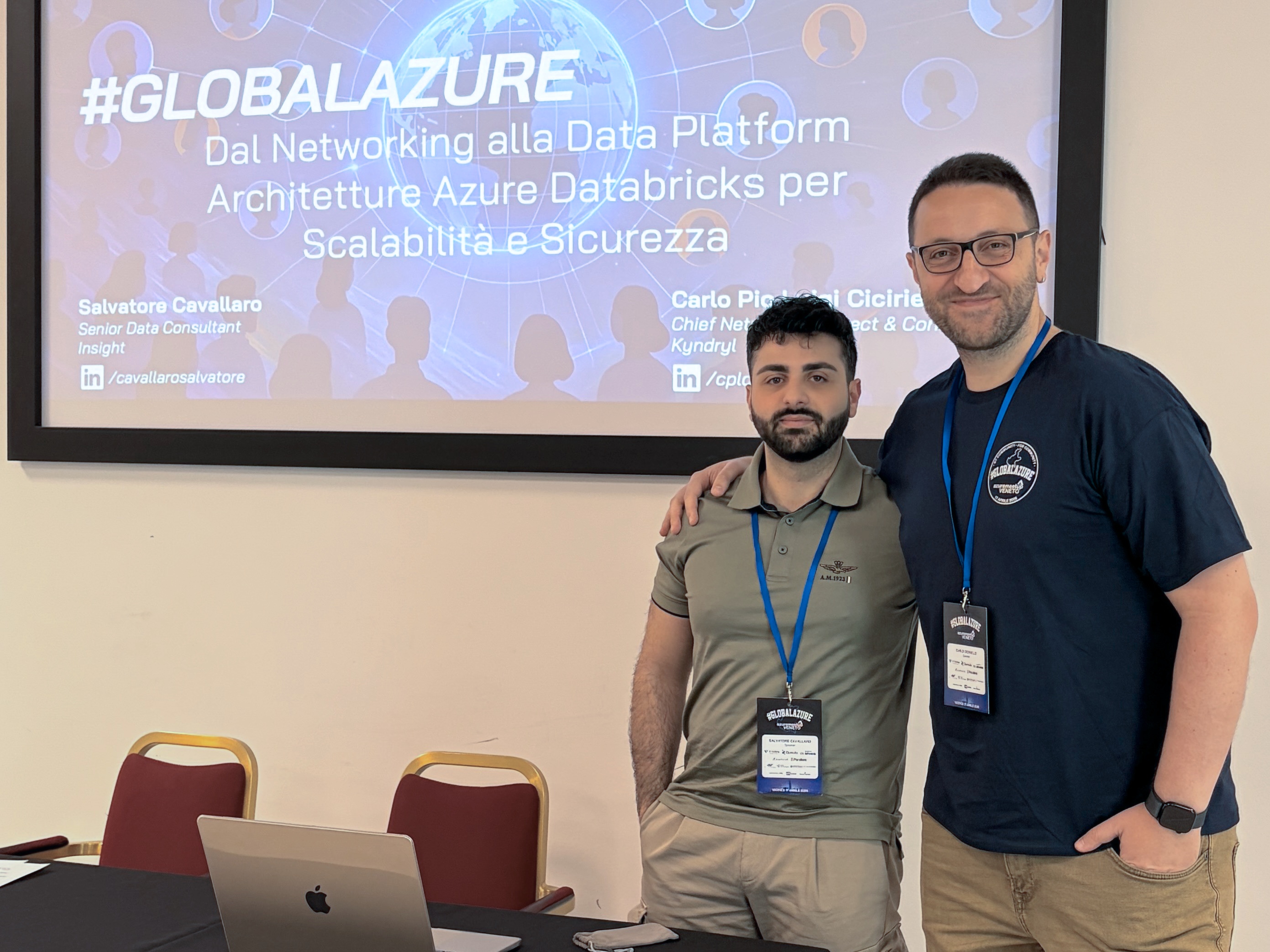
On April 17, I took the stage at Global Azure Veneto with a dear friend. We share a passion for what we do and for the technology we use every day: he is a Chief Network Architect, and I am a Data Solution Architect. We have different skill sets, often working in separate departments that struggle to communicate with one another. It is precisely this disconnect that motivated us to create this session together. All too often, those who design data architectures are unfamiliar with the network infrastructure on which they run, and those who design the infrastructure lack full awareness of the requirements of an enterprise data platform. We see the result in projects: network decisions made without considering the serverless pattern, or data architectures designed without knowing how Databricks’ Private Endpoint works. Everyone optimizes their own part, but the system as a whole remains fragile. ...
April 17, 2026 · Salvatore Cavallaro, Carlo Pio Luigi Ciciriello
Databricks vs Fabric (Real-Time scenario)

Real-Time: Databricks vs Microsoft Fabric o Spark vs Kusto

Real-Time: Databricks vs Microsoft Fabric or Spark vs Kusto Databricks or Microsoft Fabric for building architectures for (Near) Real-Time data analysis? This is a question that naturally arises when we consider building an architecture for managing streaming data on Microsoft Azure. We are witnessing the evolution of modern data architectures, where we can observe a progressive convergence between batch and streaming paradigms, driven by the need to reduce “Time-to-Insight” and enable instant decision-making processes. In the current landscape, two platforms emerge as undisputed leaders in Azure, offering divergent architectural philosophies. Databricks is based on the Apache Spark engine and Lakehouse architecture, while Microsoft Fabric offers a unified SaaS ecosystem based on multiple specialised engines, including Kusto for Real-Time Intelligence. ...

December 10, 2025 · Salvatore Cavallaro